At Samværk, we work at the intersection of psychology, creativity, and community.
We are Anja, Marlene, and Sheila – therapists and psychologists with a daily practice at Tværfagligt Hus for Mental og Kropslig Sundhed (Interdisciplinary House for Mental and Physical Health) in Vesterbro. Here, we work with people's well-being, relationships, and life situations through therapeutic conversations and processes.
Parallel to this, we are interested in a growing psychological field: craft psychology.
What is craft psychology?
Craft psychology deals with how creative activities involving hands, materials, and often bodily participation affect our mental and emotional well-being.
The concept of craft is broadly understood and includes:
- textile crafts such as knitting and crocheting
- working with wood, clay, and other materials
- repair, construction, and building
- practices where one shapes, assembles, or alters something physical
The crucial factor is not the type of activity, but the creative process and the direct, sensory contact with the material.
Psychological mechanisms of action
Across different forms of craft, both research and clinical experience point to a number of central mechanisms:
Regulation of the nervous system
Repetitive or rhythmic actions can help down-regulate physiological arousal and create a sense of calm.
Sensory and bodily grounding
Attention is oriented towards the concrete and what is happening in the moment, which can reduce cognitive load.
Focused attention
The creative process can act as a form of attentional delimitation, where racing thoughts recede into the background.
Mastery and agency
Creating something tangible can strengthen the experience of competence and coherence.
Process orientation
Craft often involves slow and sequential processes, which can support patience and immersion in contrast to an accelerated everyday life.
Craft psychology can thus be understood as a practical supplement to conversation-based approaches – a way of working with well-being through action, materiality, and process.
From therapeutic experience to concrete practice
In our own work as therapists, craft psychology first became apparent as an experience in practice.
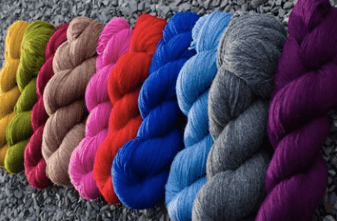
In a daily life characterized by conversations, reflection, and screen work, a need arose for activities that engaged other aspects of attention. Working with yarn – and later also with space, materials, and construction – became a way to create variation, regulation, and balance.
This became the starting point for Samværk.
Here, we have established a space where the same psychological qualities we work with in therapy can be expressed in an everyday context – without being therapy.
An expanded view of creative processes
Although Samværk is based on yarn and textile practices, we work with a broad understanding of craft.
We see the same psychological qualities across:
- fine motor and repetitive activities
- more physical and strength-based processes
- quiet immersion and more action-oriented approaches
What is central is the relationship to the material and the experience of being engaged in a creative process.
Different people find calm, focus, and well-being through different forms of activity – and craft psychology encompasses this variation.
A social and psychological space
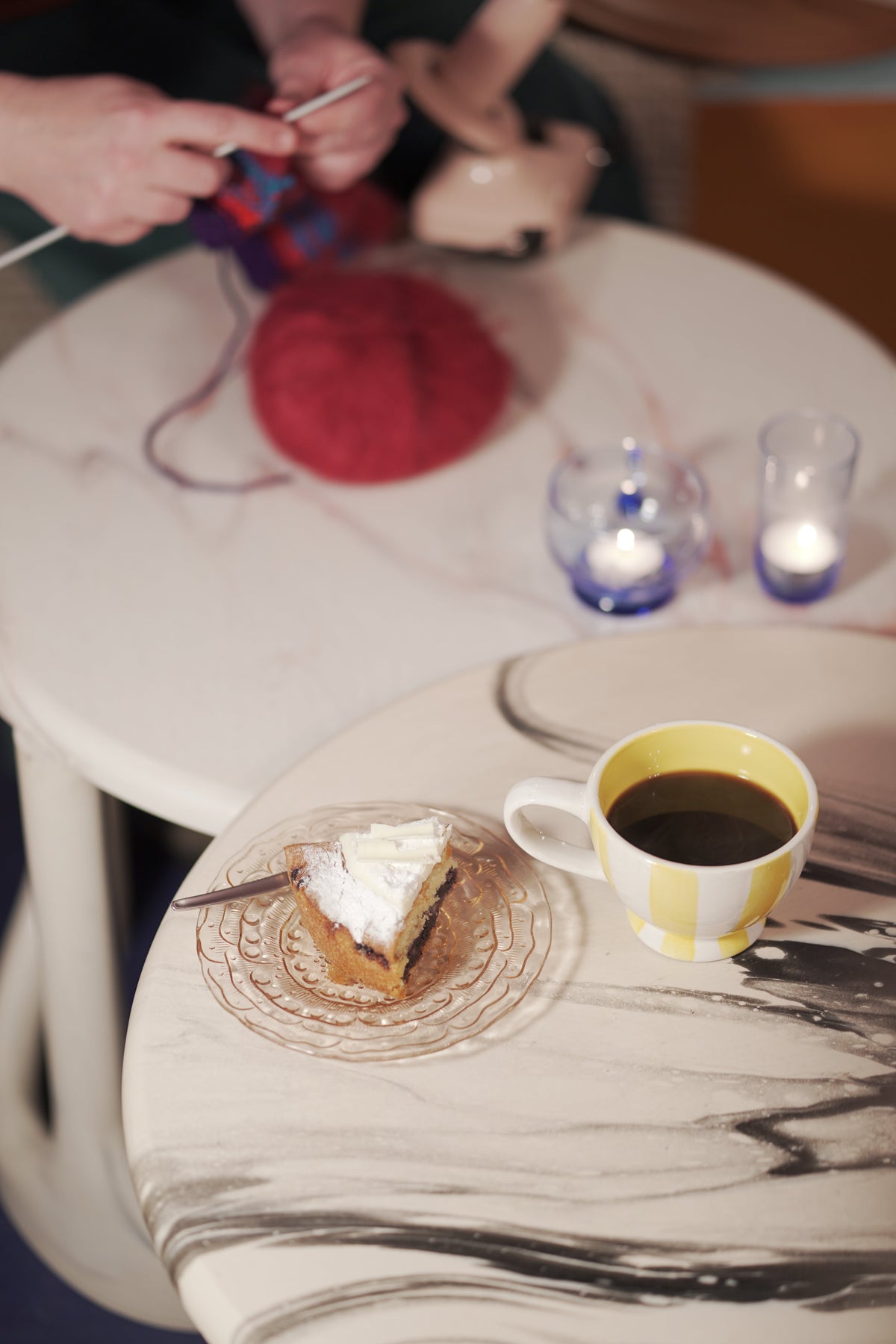
Samværk is a yarn shop and knitting café, but also functions as a social space with psychological qualities.
We observe daily how having one's hands busy can:
- create breaks in a busy daily life
- reduce the experience of performance pressure
- support informal communities
- facilitate conversations that arise side by side
The shared activity creates a framework where contact can arise without demands for articulation or performance.
Dissemination, presentations, and collaborations
As a natural extension of our work, we experience a growing demand from schools, institutions, and businesses.
We give presentations, workshops, and develop programs for, among others:
- schools and educational institutions
- businesses and workplaces
- professionals in health, pedagogy, and social work
Here we work to:
- introduce craft psychology as a concept and practice
- disseminate the psychological and neurobiological perspectives
- show how creative activities can be used in working with well-being
- develop concrete and applicable formats for the specific context
Some want an introduction to the field, while others want to implement craft psychology as an integral part of their practice.
We always adapt the content to the target group and needs.
A bridge between different forms of practice
We continue to work as therapists at Tværfagligt Hus, and Samværk is not a substitute for therapeutic work.
It is an extension.
A place where some of the same fundamental principles – regulation, attention, and relationship – can find space in another form.
Craft psychology suggests that mental well-being is not solely developed through reflection and conversation, but also through what we do, create, and engage in with our hands and our surroundings.
Contact and collaboration
If you are curious about craft psychology – either as a professional or as an organization – you are welcome to contact us.
We are happy to engage in collaborations, presentations, and development programs where craft psychology is put into practice.